
Rethinking Africa’s Development Model
Credit Africa Business News Network (CABNN)
For decades, Africa’s development strategy has largely focused on financing roads, railways, airports, ports, dams, and public infrastructure through borrowing. While these investments remain essential, there is a critical question that deserves equal attention:
What if Africa invested in businesses with the same urgency it invests in physical infrastructure?
The future of Africa’s economic transformation will not be determined by infrastructure alone, but by the businesses that use that infrastructure to create jobs, produce goods, pay taxes, and drive innovation.
SMEs Are Africa’s Most Undervalued Infrastructure
Across the continent, Small and Medium Enterprises (SMEs) account for over 90% of businesses, generate a substantial share of employment, and contribute around 40% of GDP in many African economies. Yet they continue to face significant barriers to finance, formalisation, technology adoption, and market access.
Unlike roads or bridges, SMEs continuously generate economic activity.
Every successful SME creates:
- Jobs
- Tax revenue
- Innovation
- Local manufacturing
- Export capacity
- Community wealth
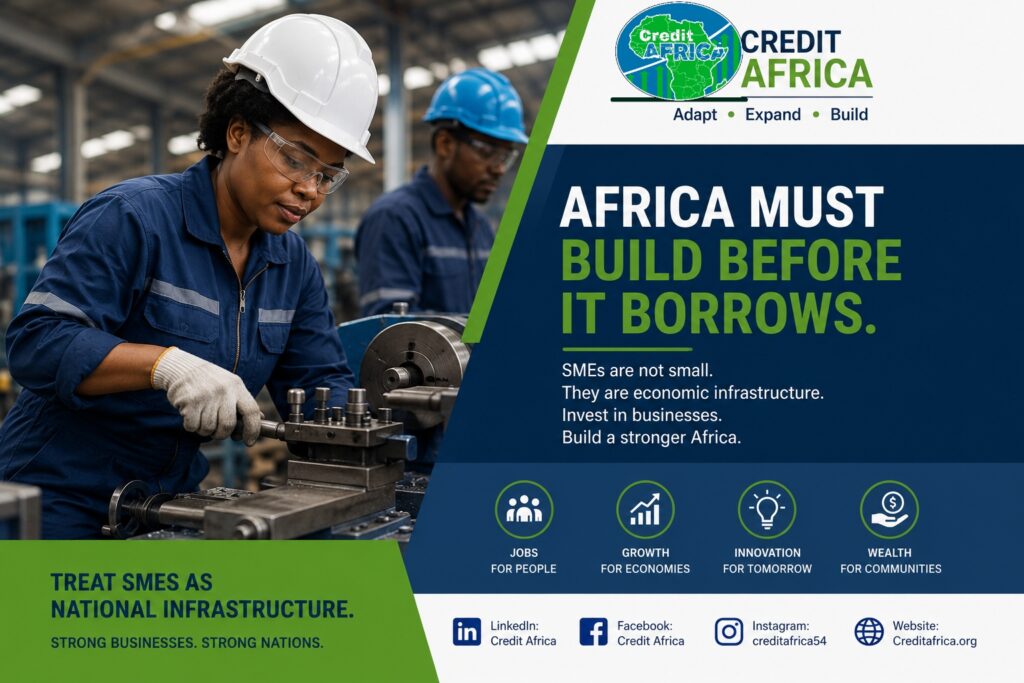
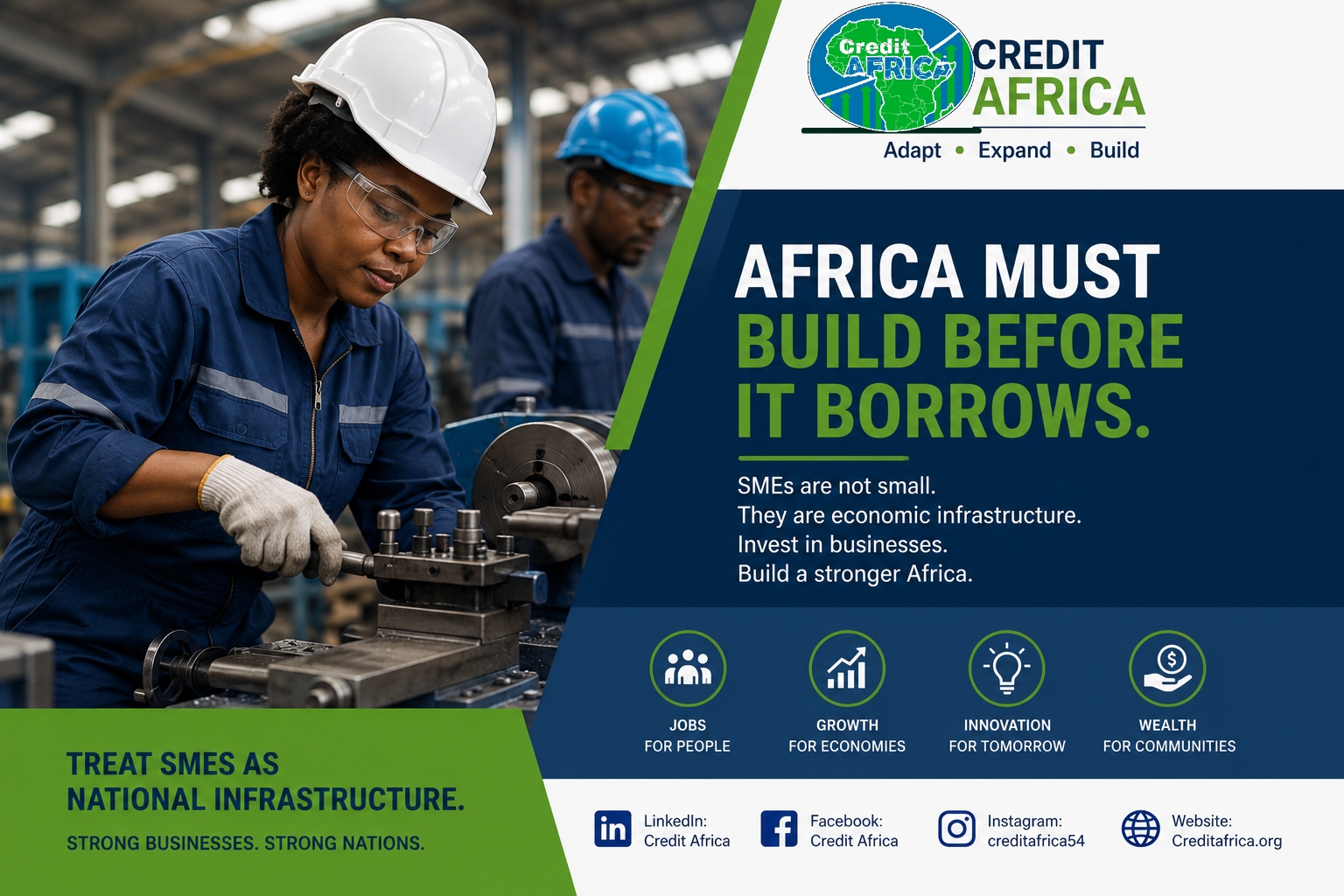
In many respects, SMEs are economic infrastructure.
Africa Must Build Before It Borrows
The African Development Bank’s African Economic Outlook 2026 argues that Africa must fundamentally rethink its development financing model by mobilising domestic resources, strengthening private-sector development, and building resilient value chains rather than relying excessively on external borrowing.
This shift requires governments to recognise SMEs not simply as beneficiaries of policy, but as strategic national assets.
When governments invest in SME development through financial inclusion, business formalisation, skills development, digital infrastructure, procurement reforms, and access to capital, they build productive economies that reduce long-term dependence on debt.
Why Governments Should Prioritise SMEs
1. SMEs Create Employment Faster
Large infrastructure projects create temporary employment.
Growing SMEs create permanent employment.
2. SMEs Expand Domestic Production
Supporting local manufacturers and agribusinesses reduces import dependence while increasing exports.
3. SMEs Strengthen Government Revenue
As businesses formalise and grow, tax revenues increase naturally through economic expansion rather than higher tax rates.
4. SMEs Improve Financial Inclusion
Financially inclusive businesses strengthen banking systems, deepen capital markets, and increase domestic investment.
5. SMEs Build Economic Resilience
Diversified economies recover faster from external shocks than those dependent on a few commodities.
Current Policy Direction
Across Africa, policymakers are increasingly emphasising private-sector-led growth, domestic capital mobilisation, regional trade, and stronger SME ecosystems as part of long-term economic transformation. Recent African Development Bank discussions have called for reforms that attract investment, deepen regional integration, and strengthen domestic resource mobilisation amid rising debt pressures.
Credit Africa Insight
Africa’s future cannot be financed by borrowing alone.
It must be built through productive enterprises that create sustainable wealth.
Roads connect cities.
Businesses connect people to opportunity.
Every dollar invested in a competitive SME ecosystem creates long-term economic capacity that continues generating returns long after public infrastructure has been completed.
Governments that place SMEs at the centre of national development strategies will build stronger industries, stronger tax bases, stronger financial systems, and stronger economies.
Africa does not simply need more infrastructure.
Africa needs businesses that become infrastructure.
Discussion
If governments treated SME development with the same priority as roads, energy, and transport infrastructure, how much faster could Africa industrialise?
🌐 Discover more business intelligence, investment opportunities, and policy insights at CreditAfrica.org
#CreditAfrica #CABNN #AfricanEconomy #SMEsAfrica #Industrialisation #EconomicDevelopment #BusinessGrowth #InvestInAfrica #AfCFTA #Policy #Infrastructure #Entrepreneurship #Leadership