
Why Africa’s Next Economic Revolution Will Be Digital
Credit Africa Business News Network (CABNN)
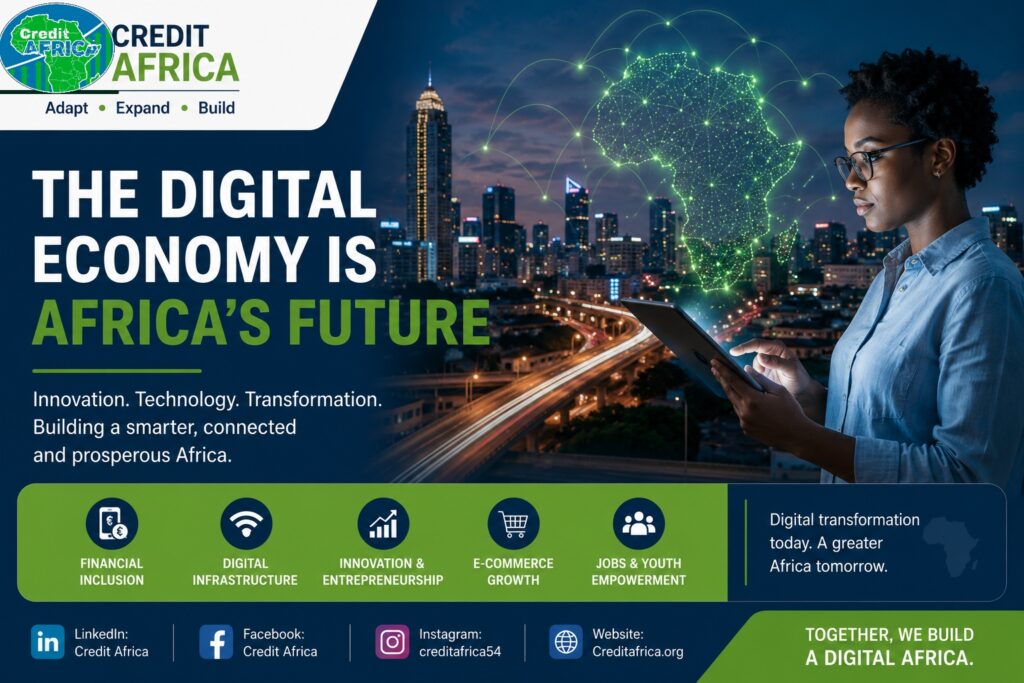
The future of Africa’s economy will not be built solely on natural resources or traditional industries.
It will be built on data, digital infrastructure, innovation, artificial intelligence (AI), fintech, digital payments, e-commerce, cloud computing, and connected entrepreneurs.
Across the continent, governments, investors, and businesses are rapidly recognising that the digital economy is no longer a supporting sector—it is becoming a core driver of economic growth, productivity, and competitiveness.
For Africa, digital transformation is not simply about technology. It is about creating jobs, improving public services, expanding financial inclusion, and enabling businesses of every size to compete globally.
Africa’s Digital Economy Is Accelerating
According to the GSMA Mobile Economy Africa 2026 report:
- Mobile technologies contributed US$240 billion to Africa’s economy in 2025, representing 7.8% of GDP.
- The sector supported approximately 13 million jobs.
- Mobile technologies generated US$45 billion in public revenues.
- By 2030, the digital mobile economy is projected to contribute US$290 billion to Africa’s economy.
This demonstrates that digital technologies are becoming one of Africa’s most important economic assets.
The Digital Economy Is More Than Technology
Africa’s digital economy now includes:
- Financial Technology (FinTech)
- Digital Payments
- Artificial Intelligence
- E-commerce
- Smart Agriculture
- Digital Manufacturing
- Health Technology
- Digital Education
- Cloud Computing
- Government Digital Services
- Cybersecurity
- Logistics Technology
Every industry is becoming digital.
Five Reasons the Digital Economy Matters
1. Job Creation
Technology startups, digital services, software development, and online businesses continue creating employment opportunities for Africa’s growing youth population.
2. Financial Inclusion
Mobile money, digital wallets, and fintech platforms are helping millions access financial services previously unavailable through traditional banking.
3. Higher Productivity
Digital technologies enable businesses to reduce costs, automate processes, improve customer experiences, and reach new markets.
4. Better Government Services
Digital government platforms improve transparency, service delivery, tax administration, healthcare systems, and public administration.
5. Regional Trade
Digital commerce strengthens the African Continental Free Trade Area (AfCFTA) by connecting businesses across borders and expanding regional markets.
Challenges Still Facing Africa
Despite remarkable progress, several barriers remain.
GSMA reports that while mobile broadband coverage is widespread, 63% of Africans live within coverage but still do not use mobile internet, mainly because of device affordability, digital skills, and access challenges. Operators are expected to invest more than US$76 billion in network infrastructure between 2024 and 2030 to address these gaps.
These figures highlight that Africa’s next challenge is no longer only connectivity, but ensuring people and businesses can fully participate in the digital economy.
Current Industry Trend
Across Africa, telecommunications companies are evolving beyond connectivity providers into digital transformation partners, deploying AI, expanding digital services, and opening networks to developers and enterprises. This shift is accelerating innovation for governments, businesses, and startups.
Credit Africa Insight
Africa’s greatest natural resource is no longer only what lies beneath the ground.
It is the innovation, creativity, and entrepreneurial potential of its people.
Countries that invest in digital infrastructure, digital skills, AI, fintech, startup ecosystems, cybersecurity, and SME digitalisation will become Africa’s future economic leaders.
The digital economy is no longer optional.
It is becoming the foundation of Africa’s competitiveness in the global economy.
At Credit Africa, we believe digital transformation must be accompanied by access to finance, investment readiness, strong governance, and innovation-driven entrepreneurship.
Technology alone does not transform economies.
People using technology productively do.
Discussion
What should African governments prioritise most to accelerate the digital economy, digital infrastructure, AI, digital skills, fintech, or startup financing?
🌐 Read more business intelligence, investment opportunities, and market insights at CreditAfrica.org
#CreditAfrica #CABNN #DigitalEconomy #Innovation #Technology #ArtificialIntelligence #FinTech #AfricaRising #AfCFTA #Entrepreneurship #Investment #EconomicDevelopment #DigitalTransformation #InvestInAfrica