
Credit Africa Business News Network (CABNN)
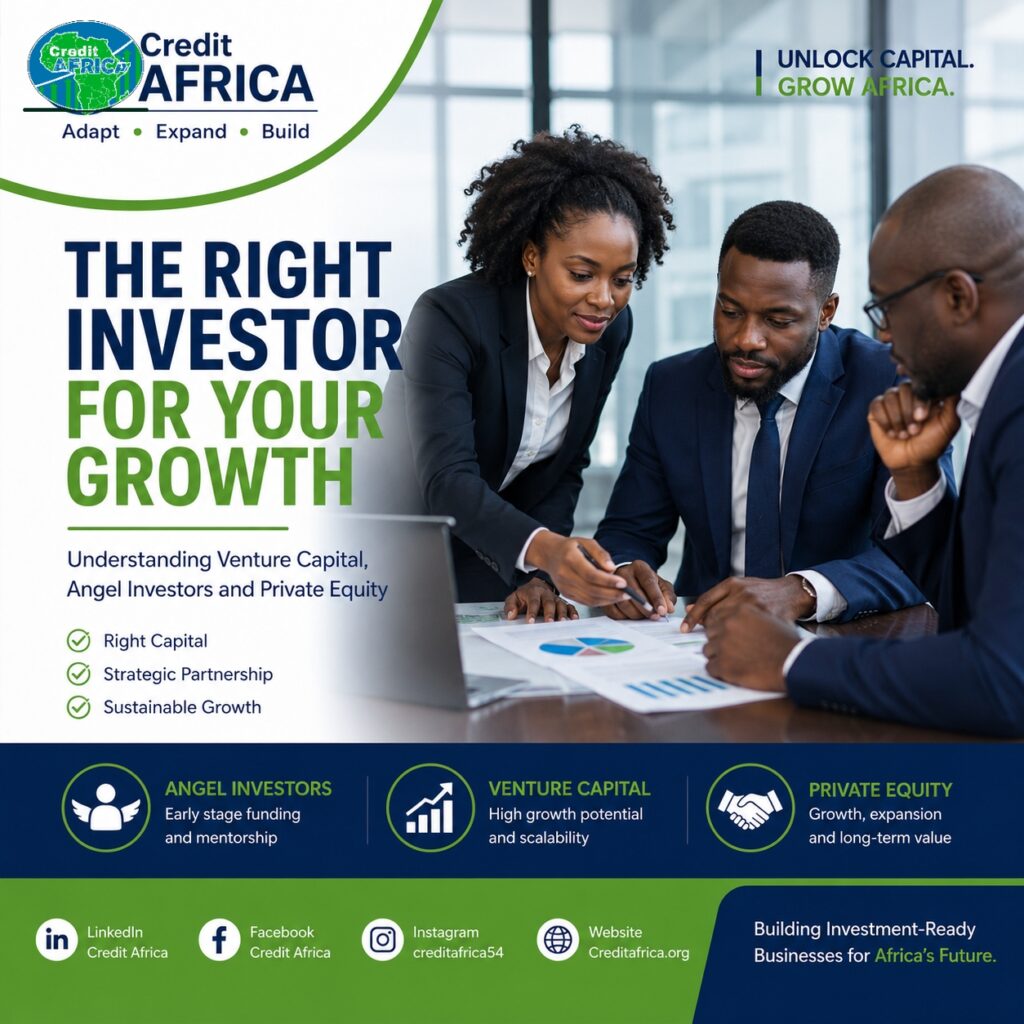
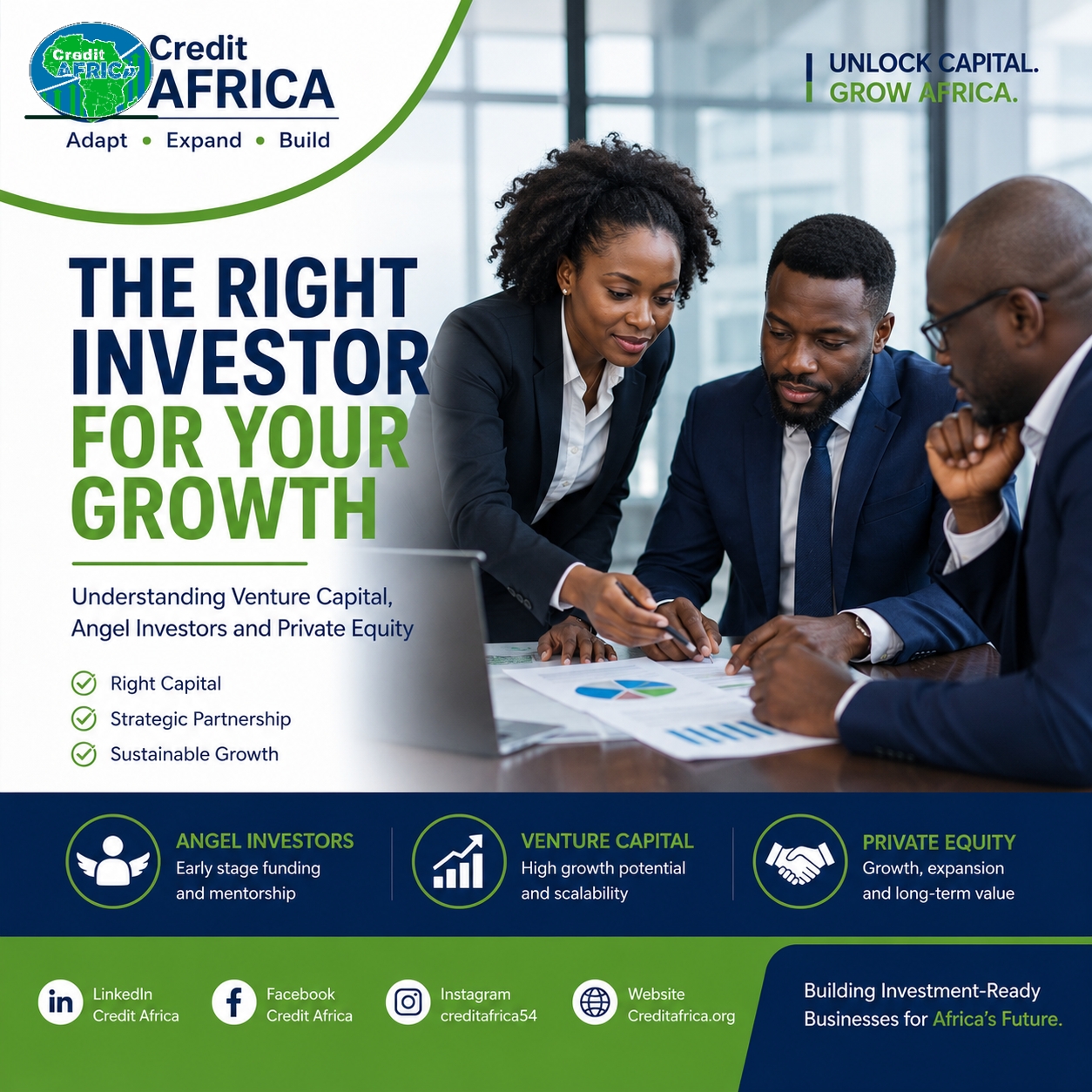
Understanding Venture Capital, Angel Investors and Private Equity
Introduction
One of the biggest challenges facing African entrepreneurs is not simply raising capital, it’s understanding which type of investor is best suited for their business.
Many founders approach venture capital firms when they should be speaking with angel investors. Others seek bank loans when private equity or strategic investment would be more appropriate.
Understanding the different sources of investment can dramatically improve your fundraising strategy and increase your chances of securing capital.
As Africa’s investment ecosystem matures, entrepreneurs who understand how investors think will gain a significant competitive advantage.
Africa’s Investment Landscape in 2026
Africa’s startup and private capital ecosystem continues to evolve.
Recent industry reports indicate:
African startups raised approximately US$3.9 billion in 2025, signalling a stabilising investment environment after previous market slowdowns. African investors accounted for a record share of funding, while venture debt also expanded significantly.
Despite growing investment activity, Africa’s SME financing gap remains approximately US$331 billion, highlighting the enormous opportunity for investment-ready businesses.
Recent AVCA research also shows that fundraising rebounded strongly in early 2026, although investors remain highly selective and concentrate funding on businesses with strong fundamentals.
1. Angel Investors
Angel investors are individuals who invest their personal capital into early-stage businesses.
They typically invest:
- Pre-seed
- Seed Stage
- Early Growth
What Angel Investors Look For
✔ Great founders
✔ Innovative ideas
✔ Market potential
✔ Early customer traction
✔ Passion and commitment
Investment sizes are generally smaller than venture capital but often come with valuable mentorship and business networks.
Across Africa, organised angel networks now operate in more than 37 countries, expanding access to early-stage funding beyond traditional startup hubs.
2. Venture Capital (VC)
Venture Capital firms manage investment funds and invest in businesses capable of rapid growth.
VCs typically invest in businesses that already have:
- Proven products
- Paying customers
- Strong revenue growth
- Scalable technology
- Large market opportunities
Unlike angel investors, venture capital firms usually expect high-growth businesses capable of generating significant returns.
VC funding is common in:
- FinTech
- HealthTech
- Digital Platforms
- Clean Energy
- AgriTech
- AI
- Software
3. Private Equity (PE)
Private Equity firms generally invest in more mature businesses.
They often seek companies with:
- Established operations
- Strong management
- Predictable revenues
- Expansion opportunities
Private Equity investments are usually much larger than Venture Capital investments.
PE firms frequently support:
- Manufacturing
- Infrastructure
- Mining
- Real Estate
- Energy
- Logistics
- Healthcare
Comparing the Three
| Investor Type | Business Stage | Typical Investment Focus |
|---|---|---|
| Angel Investor | Startup / Early Stage | Founders, innovation, early growth |
| Venture Capital | Growth Stage | High-growth, scalable companies |
| Private Equity | Mature Businesses | Expansion, acquisitions, operational growth |
Which Investor Is Right for You?
Ask yourself:
- Do I have customers?
- Is my business generating revenue?
- Can my business scale rapidly?
- Do I need mentorship or expansion capital?
- Am I willing to share ownership?
Choosing the wrong investor wastes valuable time.
What Investors Want
Regardless of investor type, nearly all professional investors look for:
✔ Strong leadership
✔ Clear business model
✔ Good governance
✔ Financial discipline
✔ Market opportunity
✔ Competitive advantage
✔ Scalability
✔ Risk management
Credit Africa Insight
The best businesses don’t chase investors.
They become businesses investors actively seek.
Investment readiness begins with:
- Good governance
- Financial transparency
- Professional management
- Strong business planning
- Market validation
Capital follows confidence.
Confidence follows preparation.
How Credit Africa Supports Entrepreneurs
Credit Africa helps African businesses become investment-ready through:
- Business planning
- Financial modelling
- Investment advisory
- Corporate governance
- Investor matchmaking
- Capital raising support
- Strategic partnerships
We bridge the gap between ambitious African businesses and global investment capital.
Industry Trend
Africa’s investment ecosystem is becoming more sophisticated.
Angel investors are supporting innovation.
Venture Capital is backing technology-enabled growth.
Private Equity is driving business expansion and industrial development.
Entrepreneurs who understand these funding pathways will be better positioned to build globally competitive businesses.
Call to Action
Looking for the right investors for your business?
Whether you’re raising seed capital, growth financing, or expansion investment, Credit Africa can help you prepare, connect, and grow.
Visit Creditafrica.org to discover business insights, investment opportunities, and advisory services.
Credit Africa: Seamless Banking, Transforming Africa.
Connecting African Businesses with Global Capital.