
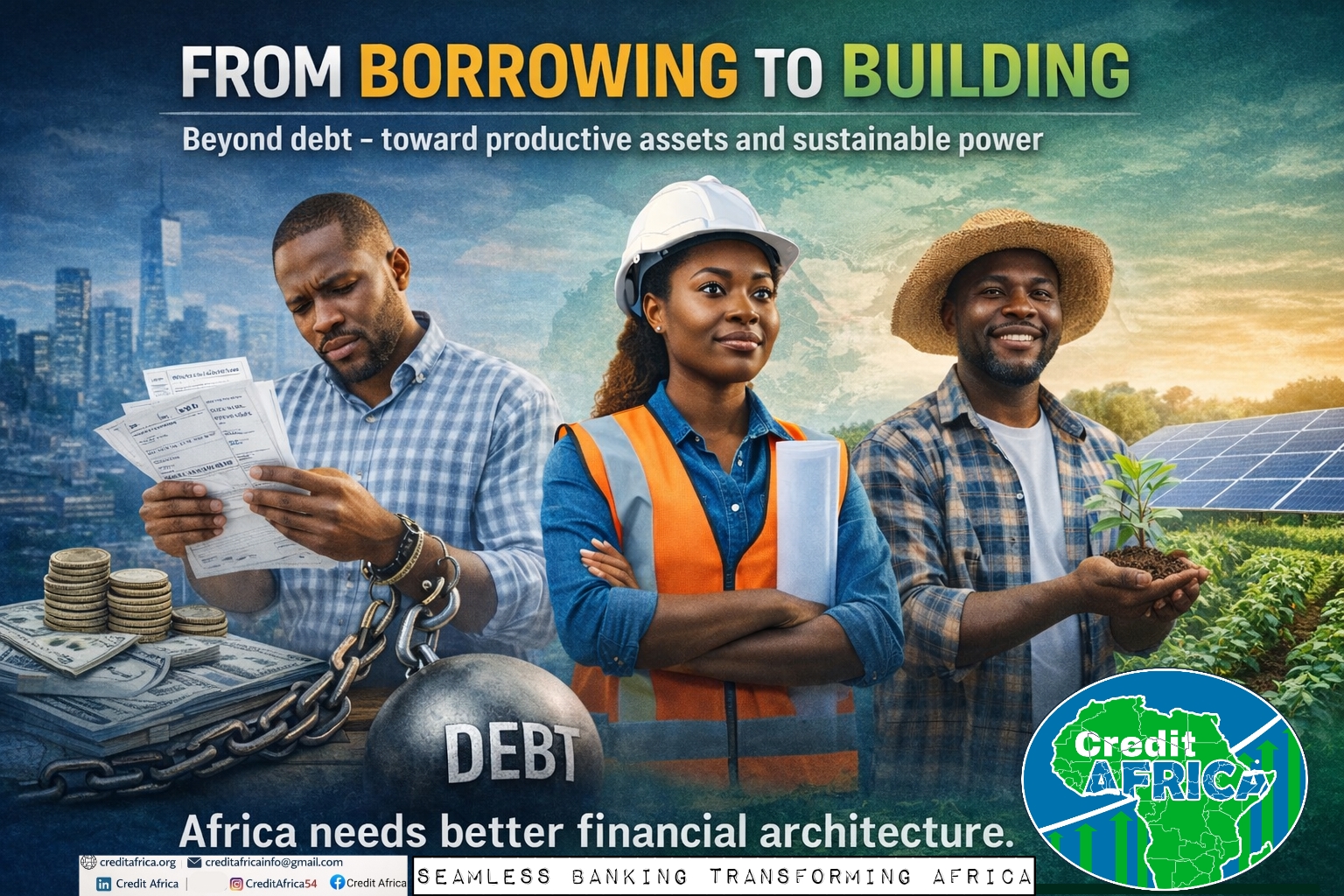
Across Africa, entrepreneurship is rising but access to sustainable capital remains constrained. Too often, the dominant narrative suggests that “more credit” is the solution to our development challenges. The reality is more complex.
Credit Isn’t the Panacea It’s Often Portrayed To Be
Despite the surge in entrepreneurial activity, only 20–30% of SMEs across many African countries access formal bank loans, with agricultural SMEs receiving even less (Brookings Institution).
The barriers are structural:
- Collateral requirements that frequently exceed the loan value
- High interest rates driven by macroeconomic instability
- Lengthy, costly compliance procedures
- Weak credit profiling systems
In this environment, credit alone does not unlock growth.
When entrepreneurs borrow without strong fundamentals governance, financial records, market positioning, asset strategy debt can become a liability rather than leverage. Instead of scaling productive enterprises, businesses risk entering cycles of refinancing, high repayment pressure, and stagnant expansion.
A Structural Challenge, Not an Entrepreneurial Failure
Africa’s issue is not a lack of ambition. It is the architecture of its financial ecosystem.
A borrower-centric mindset assumes that access to loans equals empowerment. But empowerment comes from:
- Asset creation
- Local capital mobilization
- Improved credit intelligence systems
- Blended and patient capital models
- Regional financial integration
Without these structural pillars, credit becomes consumption financing rather than productive investment.
At Credit Africa, we believe Africa must transition:
👉 From borrowing to building.
👉 From short-term liquidity to long-term capital formation.
👉 From dependency to financial sovereignty.
Our continental vision is not anti-credit it is pro-structure.
We advocate for:
– Stronger SME profiling frameworks
– Collateral innovation beyond landed property
– Development-oriented lending models
– African-led capital pools
Policy alignment that reduces structural cost of capital
The goal is not simply to increase loan volume.
The goal is to increase productive assets, resilient enterprises, and sustainable economic power.
Africa does not need more debt.
Africa needs better financial architecture.
#CreditAfrica
#AfricanDevelopment
#CapitalFormation
#SMEFinance
#FinancialEcosystem
#BuildNotBorrow