Africa’s Second Growth Engine Is Already Switching On
CABNN | Credit Africa Business News Network
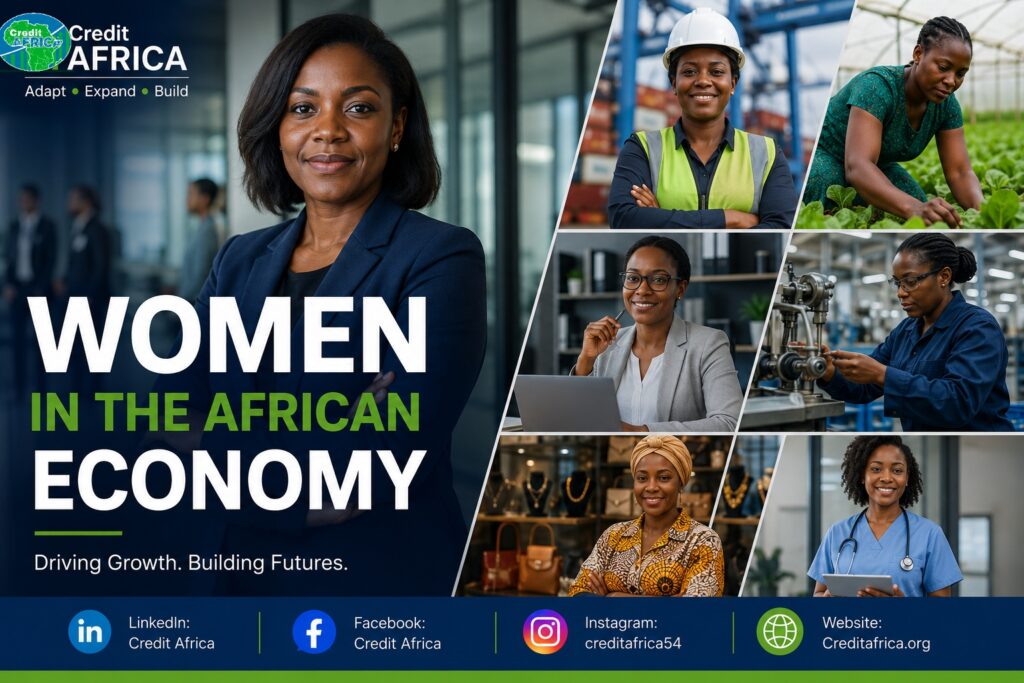
One of the most powerful and underappreciated growth stories in Africa today is the rising participation of women in the economy.
Across the continent, women are entering the workforce, building businesses, leading enterprises, driving innovation, and influencing consumer markets at an unprecedented scale.
For investors, business leaders, policymakers, and development institutions, this is not simply a social development story.
It is one of Africa’s most important economic growth stories.
And it represents a structural tailwind capable of transforming both the productive capacity and spending power of African economies for decades to come.
The Numbers Behind the Opportunity
Women account for nearly 50% of Africa’s population and represent a significant share of the continent’s workforce.
Across Africa:
• Women own approximately one-third of formal businesses.
• Women account for a majority of workers in many agricultural value chains.
• Women contribute significantly to informal trade, which supports millions of households across the continent.
• Women influence a large share of household spending decisions in sectors such as food, education, healthcare, housing, financial services, and consumer goods.
Yet despite their economic contribution, women continue to face barriers to finance, land ownership, technology access, business networks, and investment capital.
This creates one of the largest untapped opportunities in Africa’s economy.
A Dual Dividend for Growth
The economic impact operates on two fronts simultaneously.
Supply Side: Expanding the Workforce
As more women participate in the economy, Africa gains access to a larger and more diverse talent pool.
This strengthens:
• Productivity
• Innovation
• Entrepreneurship
• Skills development
• Economic resilience
Every sector benefits from a broader workforce capable of driving growth and competitiveness.
Demand Side: Expanding Consumer Markets
Rising female employment and income also create stronger consumer markets.
As women earn more, spending typically increases across:
• Retail
• Financial services
• Healthcare
• Education
• Housing
• Technology
• Transportation
Few economic shifts increase both productive capacity and consumer demand at the same time.
Women’s economic participation does exactly that.
In effect, Africa is activating a second growth engine within an already-growing economy.
Regional Growth Patterns
East Africa
Countries such as Kenya, Rwanda, Tanzania, Uganda, and Ethiopia continue experiencing strong growth in female entrepreneurship.
Women are increasingly active in:
• Agribusiness
• Mobile money ecosystems
• Retail trade
• Technology-enabled businesses
• SME development
West Africa
Women remain central to commerce and cross-border trade.
Across Ghana, Nigeria, Senegal, Côte d’Ivoire, and neighboring markets, women drive significant activity in:
• Wholesale trade
• Retail markets
• Manufacturing
• Food processing
• Services
Southern Africa
Countries such as South Africa, Zambia, Botswana, and Namibia continue seeing increased female participation in:
• Professional services
• Financial services
• Education
• Manufacturing
• Mining-related industries
North Africa
Economic reforms and digital transformation are supporting greater female participation in sectors including:
• Technology
• Tourism
• Manufacturing
• Professional services
Why Investors Should Pay Attention
Investors often seek structural trends that can support growth for decades.
The rise of women in Africa’s economy is one of those trends.
Businesses positioned to serve and empower women are likely to benefit from:
• Larger labor pools
• Growing consumer demand
• Expanding entrepreneurial ecosystems
• Stronger SME development
• Greater financial inclusion
Sectors likely to benefit include:
• Banking and fintech
• Digital payments
• Education
• Healthcare
• Retail
• Agribusiness
• Telecommunications
• Housing
• SME finance
The SME Connection
Africa’s SME sector is one of the continent’s largest economic drivers.
SMEs represent:
• More than 90% of businesses
• Approximately 40% of GDP
• Up to 80% of employment in some markets
A significant share of these businesses are owned or managed by women.
Closing financing gaps for women-led enterprises could unlock millions of jobs and billions of dollars in economic activity across the continent.
Credit Africa Insight
At Credit Africa, we view women’s economic participation as one of the strongest long-term tailwinds shaping Africa’s future.
Like digital transformation, urbanization, and regional trade integration, it is a structural trend that expands both workforce participation and consumer spending power.
The businesses, investors, and institutions that recognize this shift early may be among the biggest beneficiaries of Africa’s next growth cycle.
The future of Africa will not be built by governments alone.
It will be built by entrepreneurs, investors, innovators, SMEs, and millions of women contributing to economic growth every day.
What It Means for Investors
Position for the dual dividend.
Rising female participation expands both the workforce and the consumer market simultaneously—a rare and powerful economic tailwind.
For investors seeking sustainable long-term growth opportunities, Africa’s women may represent one of the continent’s most important investment themes of the coming decade.
Industry Opinion
The next phase of African growth will be increasingly defined by inclusion.
Countries and businesses that successfully empower women through education, technology, finance, leadership, and entrepreneurship are likely to experience stronger economic performance, greater resilience, and broader prosperity.
Women’s economic empowerment is not only a social priority.
It is a growth strategy.
And for Africa, it may become one of the defining drivers of the continent’s economic transformation.
Credit Africa Capital Report
CABNN | Credit Africa Business News Network
Adapt • Expand • Build
Creditafrica.org