
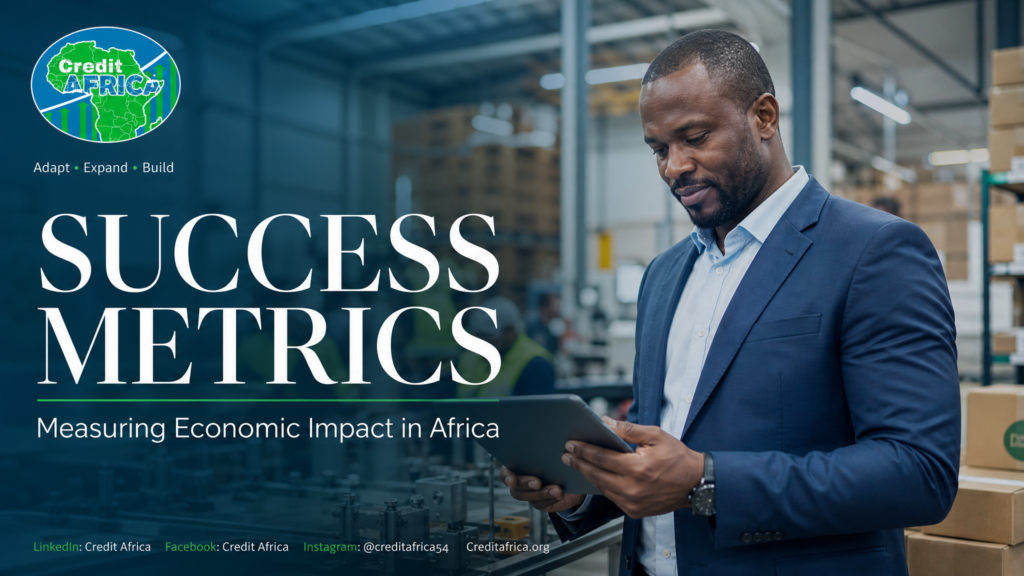
Why Investors, Governments, and Businesses Must Look Beyond Profit to Measure Real Growth
Discover the key metrics used to measure economic impact in Africa, including GDP growth, job creation, SME development, infrastructure investment, financial inclusion, and sustainable development indicators. Learn how investors can evaluate long-term success across African markets.
Introduction: What Does Success Really Look Like in Africa?
Africa is one of the world’s most dynamic investment frontiers.
Across the continent, governments are investing in infrastructure, entrepreneurs are launching innovative businesses, digital transformation is accelerating, and investors are deploying capital into emerging sectors.
Yet one critical question remains:
How do we measure success?
For decades, economic success has often been measured by a handful of indicators such as GDP growth, stock market performance, and investment returns.
While these remain important, today’s investors, policymakers, development institutions, and businesses increasingly recognize that sustainable growth requires broader measurements.
Success in Africa is not simply about how much capital is invested.
It is about the impact that capital creates.
Why Economic Impact Measurement Matters
The most successful economies generate benefits that extend beyond financial returns.
Effective economic development should:
✅ Create jobs
✅ Increase incomes
✅ Support entrepreneurship
✅ Improve infrastructure
✅ Expand financial inclusion
✅ Strengthen communities
✅ Promote sustainable growth
Measuring these outcomes helps governments, investors, and businesses make better decisions.
Key Metrics Shaping Africa’s Economic Success
1. GDP Growth
Gross Domestic Product (GDP) remains one of the most widely used economic indicators.
Many African economies continue to outperform global averages in long-term growth potential.
What GDP Measures
- Economic output
- Production levels
- Market expansion
- Economic activity
Why It Matters
Higher GDP growth often signals:
📈 Business expansion
📈 Increased consumer demand
📈 Greater investment opportunities
However, GDP alone does not tell the full story.
2. Job Creation
Employment remains one of Africa’s most important development priorities.
With one of the world’s youngest populations, creating jobs is essential for long-term stability and prosperity.
Economic Impact Indicators
- New jobs created
- Youth employment rates
- Formal sector growth
- Workforce participation
Why Investors Should Care
Projects that generate employment often create broader economic benefits throughout communities.
3. SME Growth and Development
Small and Medium Enterprises (SMEs) are the backbone of Africa’s economy.
SMEs Account For
📊 More than 90% of businesses
📊 Approximately 40% of GDP
📊 Up to 80% of employment in some markets
Success Indicators
- Number of SMEs funded
- Revenue growth
- Business survival rates
- New market access
Strong SME ecosystems contribute significantly to economic resilience.
4. Infrastructure Development
Infrastructure remains one of the strongest drivers of economic transformation.
Key Areas
🏗 Roads
🚆 Railways
✈ Airports
⚓ Seaports
⚡ Energy
📡 Digital infrastructure
Success Metrics
- Kilometers of roads built
- Energy generation capacity
- Internet penetration
- Logistics efficiency
Infrastructure investment often creates multiplier effects throughout the economy.
5. Financial Inclusion
Financial inclusion is becoming a major economic success indicator.
Across Africa, mobile money and fintech innovations are expanding access to financial services.
Key Metrics
- Mobile money adoption
- Bank account ownership
- Digital payment usage
- Access to credit
Economic Benefits
Greater financial inclusion enables entrepreneurship, savings, investment, and economic participation.
6. Foreign Direct Investment (FDI)
Foreign Direct Investment remains a key driver of growth.
Why FDI Matters
FDI can provide:
- Capital
- Technology transfer
- Skills development
- International market access
Success Indicators
📊 Investment inflows
📊 Number of projects
📊 Sector diversification
📊 Employment generated
7. Women’s Economic Participation
One of Africa’s most important growth stories is the increasing participation of women in the economy.
Why It Matters
Women’s participation expands:
- Workforce capacity
- Consumer markets
- Entrepreneurship
- Innovation
Economic Impact
Research consistently shows that higher female participation contributes to stronger and more inclusive economic growth.
8. Digital Transformation
Digital technology continues reshaping African economies.
Growth Areas
- Mobile connectivity
- E-commerce
- Digital payments
- Data infrastructure
- Innovation ecosystems
Success Indicators
- Internet users
- Digital transactions
- Startup investment
- Technology adoption
Digital transformation increasingly influences competitiveness across sectors.
Measuring Economic Impact
| Impact Metric | Why It Matters |
|---|---|
| GDP Growth | Economic expansion |
| Job Creation | Income generation |
| SME Growth | Entrepreneurship development |
| Infrastructure Investment | Productivity improvement |
| Financial Inclusion | Economic participation |
| FDI Attraction | Capital mobilization |
| Women’s Participation | Workforce expansion |
| Digital Adoption | Future competitiveness |
News Update: Trends Influencing Africa’s Economic Impact
Recent developments across Africa highlight several emerging themes:
Digital Infrastructure Expansion
Governments and telecom providers continue investing in broadband, 4G, and 5G networks.
Renewable Energy Growth
Investment in solar, wind, and clean energy projects continues accelerating.
AfCFTA Integration
Regional trade initiatives are creating larger markets and stronger investment opportunities.
SME Financing Initiatives
Financial institutions and development partners are increasing efforts to address the continent’s SME financing gap.
Public-Private Partnerships
PPPs continue supporting infrastructure development across transport, energy, and digital sectors.
Credit Africa Insight
Economic success should never be measured solely by the amount of money invested.
True success is measured by outcomes.
How many jobs were created?
How many businesses were supported?
How many communities benefited?
How many opportunities were unlocked?
At Credit Africa, we believe the most impactful investments are those that generate both financial returns and measurable development outcomes.
The future of Africa depends not only on attracting capital but on ensuring that capital creates lasting value.
Industry Opinion: The Rise of Impact-Driven Investment
One of the most important trends shaping African investment is the growing emphasis on measurable impact.
Investors increasingly seek opportunities that combine profitability with social and economic value.
This shift is driving greater interest in:
- Infrastructure development
- Renewable energy
- SME financing
- Financial inclusion
- Digital transformation
- Community-led development
Over the next decade, success will increasingly be defined by the ability to generate both returns and results.
The investors, businesses, and institutions that can demonstrate measurable impact are likely to attract greater capital, stronger partnerships, and long-term growth opportunities.
About CABNN
Credit Africa Business News Network (CABNN) provides economic intelligence, investment insights, market analysis, and business opportunities shaping Africa’s future.
🌐 Visit: Creditafrica.org
Credit Africa
Adapt • Expand • Build
#CreditAfrica #CABNN #AfricanEconomy #EconomicImpact #ImpactInvesting #InvestInAfrica #SMEsAfrica #InfrastructureAfrica #FinancialInclusion #DigitalTransformation #EconomicGrowth #AfricaRising #InvestmentInsights #BusinessAfrica #SustainableDevelopment