
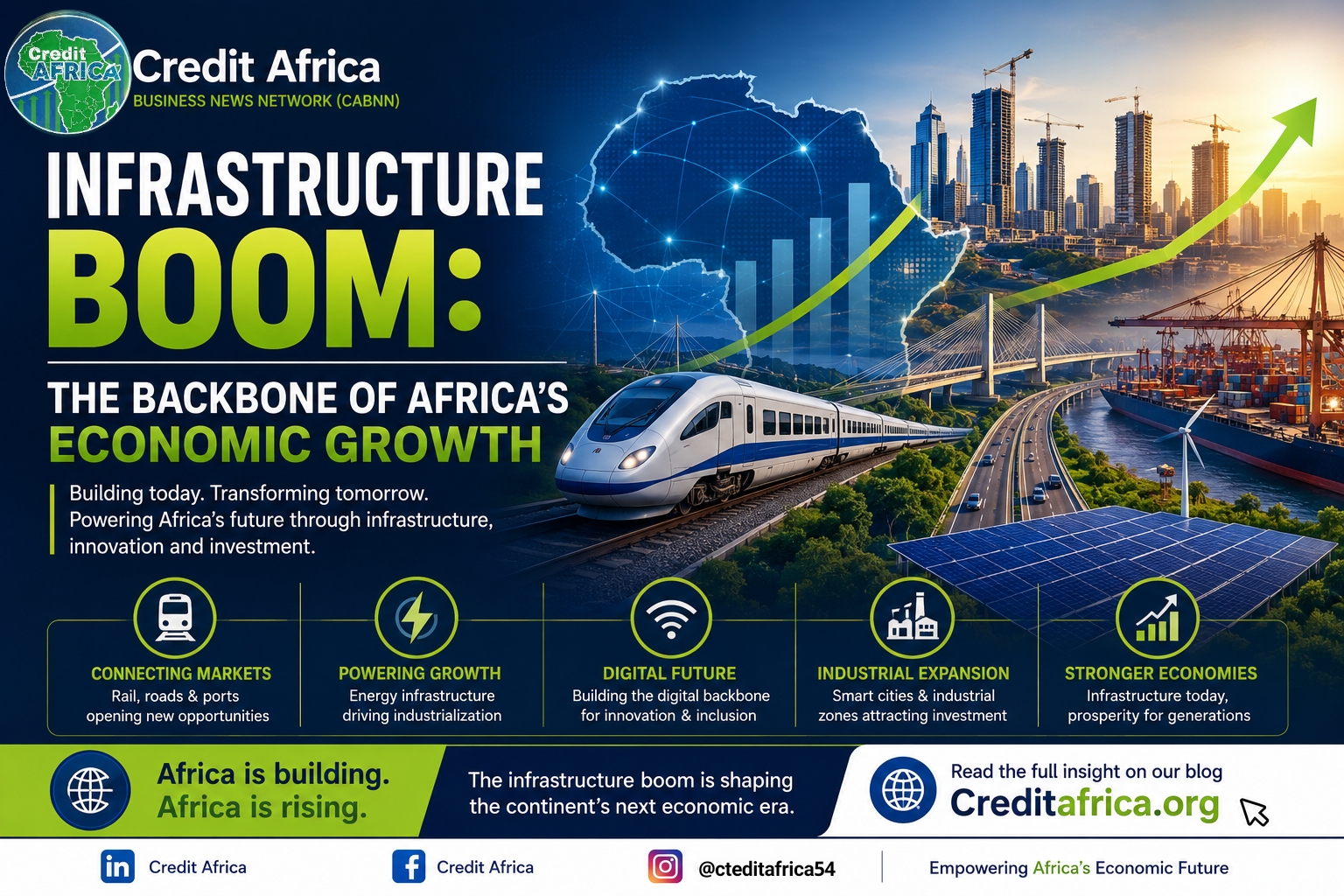
Why Infrastructure Will Define Africa’s Future
Africa’s economic transformation is no longer driven by resources alone.
Today, the continent’s next phase of growth is being powered by:
✔ Roads and railways
✔ Ports and logistics corridors
✔ Renewable energy
✔ Digital infrastructure
✔ Smart cities and industrial zones
Infrastructure is becoming the foundation upon which Africa’s economic future is being built.
According to the African Development Bank, Africa’s infrastructure financing needs range between $130 billion and $170 billion annually, highlighting both the scale of demand and the size of the investment opportunity. (afdb.org)
For investors, SMEs, and entrepreneurs, this is one of the biggest long-term economic shifts happening globally.
CABNN Insight: Why Infrastructure Matters to Africa’s Growth
Infrastructure is not just about construction.
It directly impacts:
- Trade efficiency
- Manufacturing growth
- SME expansion
- Energy access
- Job creation
- Regional integration
Poor infrastructure has historically cost African economies an estimated 2% of GDP growth annually due to logistics inefficiencies and limited connectivity. (worldbank.org)
Now, governments and private investors are accelerating projects across the continent to close that gap.
1. Transport Corridors Are Reshaping African Trade
Africa is investing heavily in:
✔ Rail systems
✔ Highways
✔ Ports
✔ Border trade infrastructure
These projects are reducing transport costs and improving cross-border trade under AfCFTA.
Major transport projects transforming Africa include:
- The Lobito Corridor connecting Angola, Zambia, and the DRC
- East African railway modernization
- Port expansion projects across West and East Africa
The Lobito Corridor alone is expected to significantly improve mineral exports and regional logistics efficiency across Southern Africa. (reuters.com)
👉 CABNN Perspective:
Trade infrastructure is becoming Africa’s competitive advantage.
2. Africa’s Energy Infrastructure Boom
Over 600 million Africans still lack reliable electricity access.
But this challenge is now creating one of the world’s largest energy investment opportunities.
Africa is rapidly expanding:
✔ Solar power
✔ Hydropower
✔ Battery storage
✔ Rural electrification
✔ Energy transmission infrastructure
Africa recorded major renewable energy expansion in 2025–2026, particularly in solar infrastructure and telecom-powered renewable systems. (reuters.com)
Countries leading renewable investment include:
- South Africa
- Kenya
- Egypt
- Morocco
- Zambia
👉 CABNN Insight:
Africa’s energy gap is no longer just a problem, it is a trillion-dollar investment opportunity.
3. Digital Infrastructure Is Accelerating Africa’s Economy
Africa’s digital economy is expanding rapidly through:
✔ Mobile money
✔ Fintech
✔ Broadband expansion
✔ Data centers
✔ AI and cloud infrastructure
Internet penetration and smartphone adoption are increasing across the continent, helping SMEs and startups scale faster.
Major telecom and technology companies are now investing heavily in:
- Fiber connectivity
- Mobile payment systems
- Digital banking infrastructure
- AI-powered services
Africa’s digital economy could contribute over $180 billion to GDP by 2028 according to industry projections. (weforum.org)
4. Smart Cities & Industrial Zones Are Emerging
Several African countries are building: ✔ Industrial parks
✔ Smart cities
✔ Manufacturing hubs
✔ Logistics zones
These developments aim to attract:
- Foreign direct investment (FDI)
- Manufacturing companies
- Technology firms
- Export industries
Examples include:
- Konza Technopolis (Kenya)
- Kigali Innovation City (Rwanda)
- Industrial zones in Ethiopia and Egypt
👉 CABNN Perspective:
Africa is moving from raw exports toward industrialization and value addition.
CABNN Business News Highlights
navlist containing the following URLs:
- US backs Lobito Corridor rail project to counter China influence in Africa
- Africa primed for solar breakthrough after record capacity growth
- Africa’s digital economy could hit $180 billion by 2028
- AfDB says Africa needs up to $170 billion annually for infrastructure
🔹 Africa’s Infrastructure Financing Gap Creates Massive Opportunity
The African Development Bank estimates Africa requires up to $170 billion annually in infrastructure investment. (afdb.org)
🔹 Renewable Energy Expansion Accelerating
Africa’s solar sector is seeing record growth as countries invest in energy security and industrial expansion. (reuters.com)
🔹 Global Powers Increasing Infrastructure Competition in Africa
Major global powers are increasing investments in African trade corridors and logistics infrastructure. (reuters.com)
🔹 Africa’s Digital Economy Expanding Rapidly
Digital infrastructure investment is accelerating Africa’s fintech and startup ecosystem growth. (weforum.org)
What This Means for Investors
Africa’s infrastructure boom signals: ✔ Long-term economic transformation
✔ Increased regional trade
✔ Industrial expansion
✔ Higher productivity
For investors, opportunities are growing in:
- Construction
- Logistics
- Renewable energy
- Fintech
- Manufacturing
- Digital infrastructure
The continent’s infrastructure gap is increasingly becoming one of its largest investment opportunities.
What This Means for SMEs & Entrepreneurs
Improved infrastructure creates:
✔ Faster market access
✔ Lower transportation costs
✔ Better energy reliability
✔ Expanded digital commerce
SMEs stand to benefit significantly from:
- Regional trade integration
- E-commerce growth
- Improved logistics systems
👉 CABNN Insight:
Infrastructure development is not just helping corporations, it is unlocking growth for African entrepreneurs.
The Reality Check: Challenges Still Remain
Africa still faces:
- Financing gaps
- Debt pressures
- Delayed project implementation
- Political and regulatory risks in some regions
But momentum continues to build as governments, development banks, and private investors increase infrastructure spending.
CABNN Perspective: Africa Is Building Its Economic Foundation
The narrative around Africa must evolve.
Africa is not simply exporting raw materials anymore.
It is:
✔ Building trade corridors
✔ Expanding energy systems
✔ Digitizing economies
✔ Industrializing production
✔ Connecting markets
Infrastructure is becoming the backbone of Africa’s economic rise.
📣 Africa’s Growth Story Is Being Built in Real Time
Across Africa:
🚆 Railways are expanding
⚡ Energy systems are growing
🌐 Digital infrastructure is accelerating
🏗️ Industrial zones are emerging
This is more than development.
It is the foundation of Africa’s next economic era.
The countries building infrastructure today are positioning themselves to become tomorrow’s economic powerhouses.
🌐 About CABNN
Credit Africa Business News Network (CABNN) delivers strategic business insights, investment opportunities, SME growth trends, and economic analysis shaping Africa’s future.
👉 Explore more insights at: Creditafrica.org