
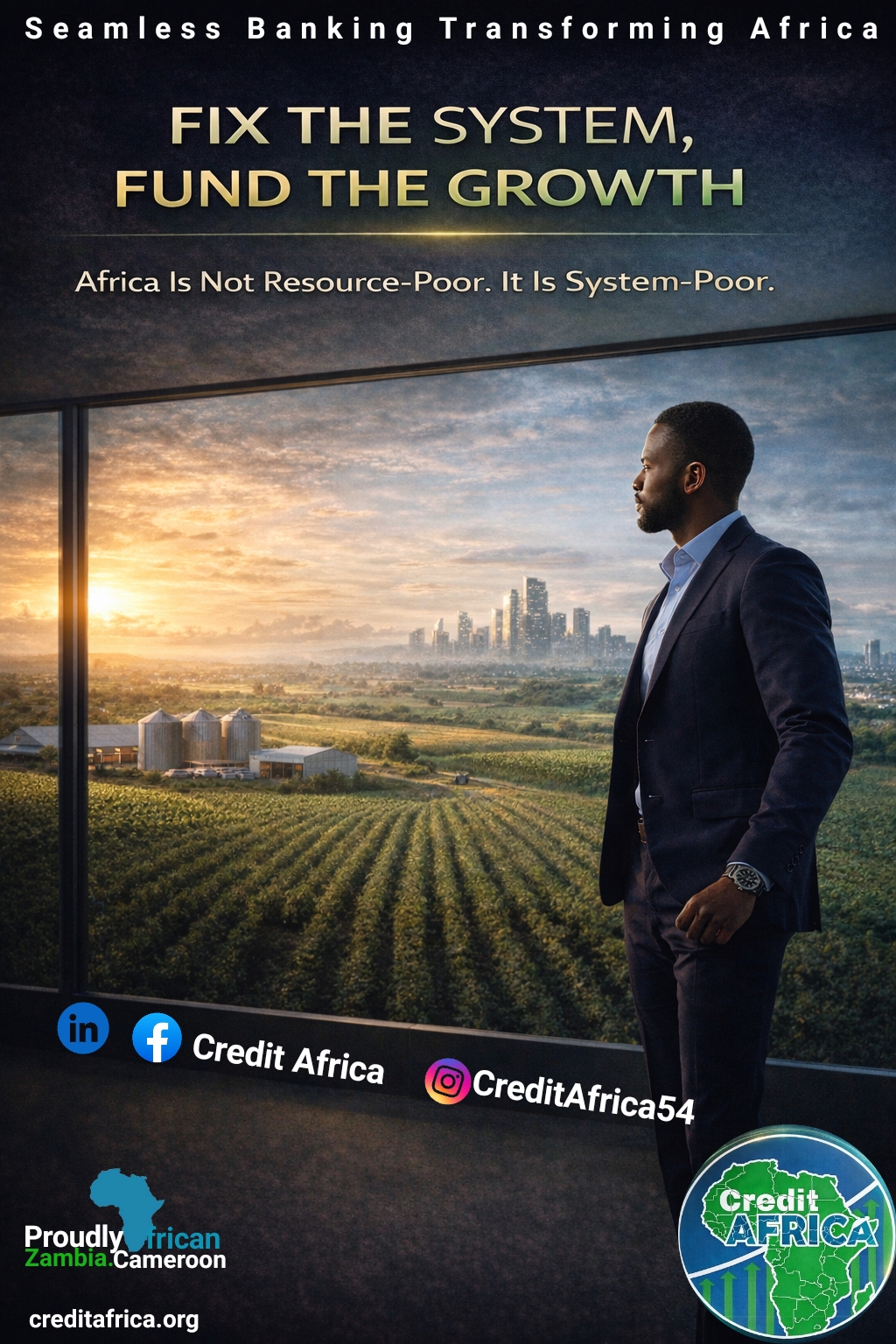
Africa Is Not Resource-Poor. It Is System-Poor.
As we continue our series on financial intelligence and structural reform, we confront a hard reality:
Africa imports over $50 billion worth of food annually.
Let that sink in. A continent with:
– 60% of the world’s uncultivated arable land
– A young labor force
– Favorable climates
– Expanding domestic markets
Yet we remain structurally dependent on food imports.
This is not a production problem. It is a systems problem.
The Structural Gap Behind the $50B Reality
The issue is not soil.
It is structure.
- Weak agricultural value chains
- Poor storage and logistics systems
- Limited agro-processing capacity
- Fragmented financing mechanisms
- High cost of capital
- Policy inconsistency
Primary production exists. But aggregation, processing, financing, risk management, and distribution lack institutional coordination.
Capital does not fund potential. It funds systems.
The Financial Intelligence Perspective
When Africa imports $50B+ in food annually, it exports:
- Jobs
- Foreign exchange
- Industrial growth
- Supply chain power
More critically, it exports control over pricing and food security.
Why?
Because funding is often directed toward trade, not transformation.
It is easier to finance imports than to structure local agro-industrial ecosystems.
What Needs to Be Fixed?
If we want to reduce the $50B food import burden, we must fund differently.
1️⃣ Finance Value Chains, Not Just Farmers
Capital must structure around:
- Aggregators
- Storage facilities
- Processors
- Distributors
- Export hubs
2️⃣ De-risk Through Structure
- Warehouse receipt systems
- Crop insurance
- Off-take contracts
- Guarantee schemes
- Blended finance
3️⃣ Institutional Coordination
Agriculture, finance, trade, and policy must move from silos to systems.
4️⃣ Long-Term Industrial Thinking
Food security is not charity.
It is infrastructure.
The Deeper Question
Why does capital feel safer importing tomatoes than financing tomato processing locally?
Because structure reduces uncertainty.
Where uncertainty is high, capital retreats.
Where systems exist, capital flows.
The Strategic Shift
The conversation must move from:
“Why doesn’t Africa produce enough?”
To:
“How do we structure agricultural ecosystems that meet institutional finance standards?”
This is a governance and financial architecture challenge not a land problem.
Fix the system. Fund the growth.
At Credit Africa, we believe sustainable transformation will not come from more resources, but from stronger systems that convert resources into structured, financeable growth.
Because growth without systems is noise.
Growth with structure becomes power.
#CreditAfrica
#CapitalWithStructure
#FixTheSystem
#FundTheGrowth
#AfricanFinance
#FoodSecurityAfrica
#AgriFinance
#SMEFinance
#DevelopmentFinance
#TradeFinance
#FinancialIntelligence
#EconomicTransformation
#StructuredGrowth
#AfricaRising