
Africa’s Trade Revolution Is Accelerating
Africa is entering a new era of regional trade and economic integration.
For decades, African economies traded more with external markets than with one another.
Today, however:
- AfCFTA is reshaping regional commerce
- Logistics infrastructure is expanding
- Supply chains are modernizing
- Trade corridors are improving
- Regional value chains are emerging
This transformation is turning logistics and trade into one of Africa’s biggest long-term economic opportunities.
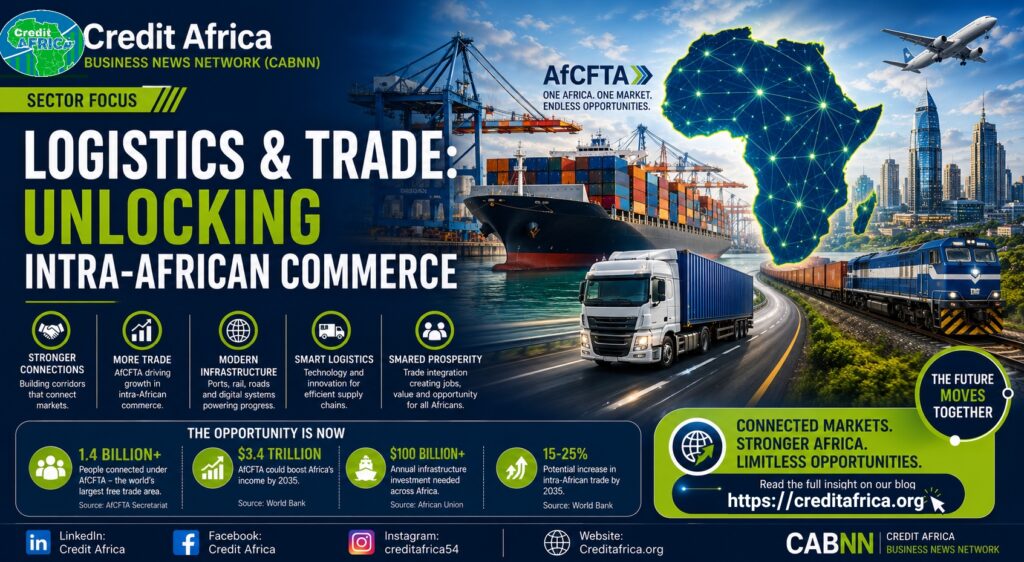
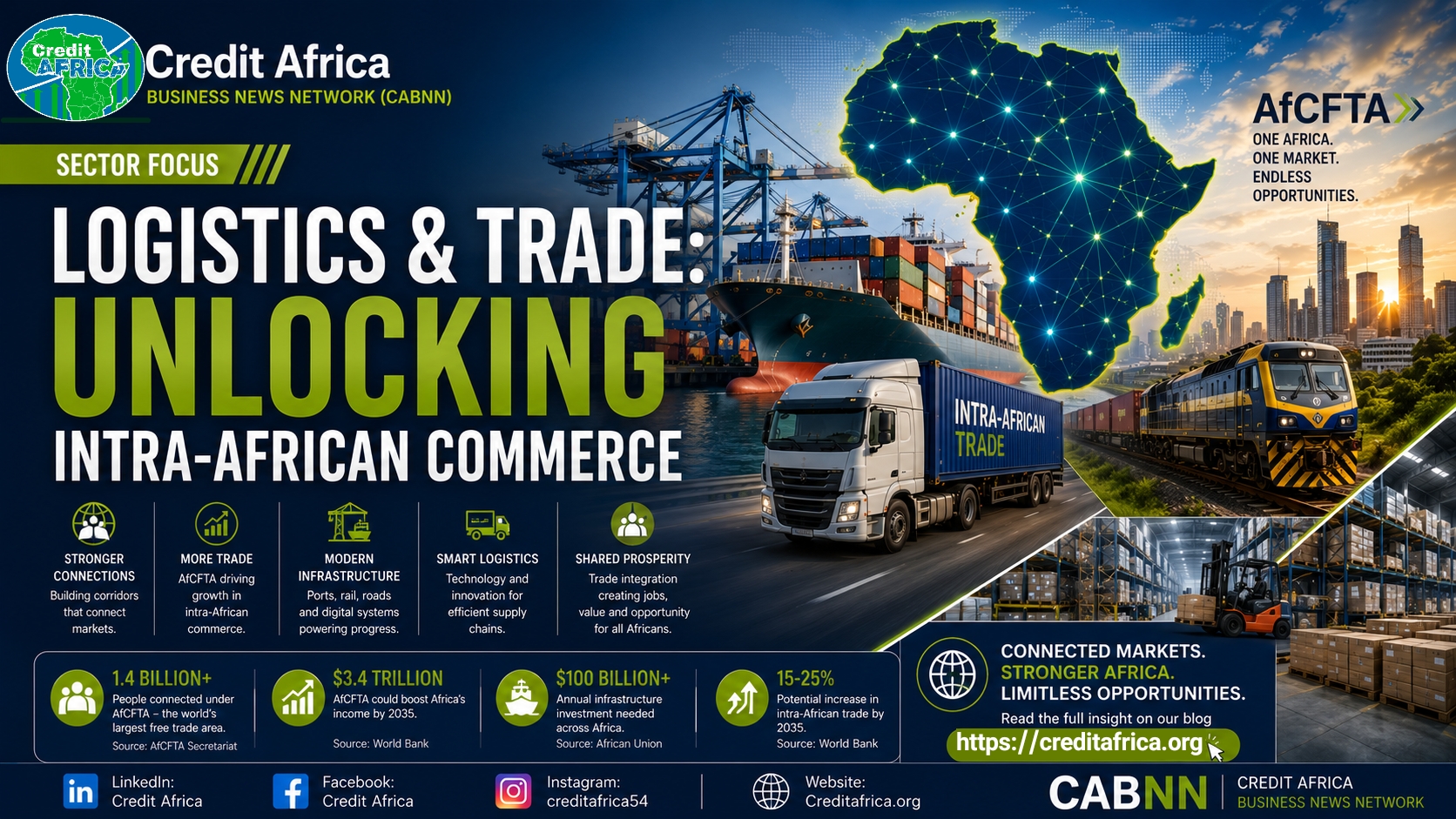
The African Continental Free Trade Area (AfCFTA) now connects over 1.4 billion people across 54 countries, making it the world’s largest free trade area by number of participating nations.
According to World Bank projections, AfCFTA could increase intra-African trade significantly by 2035 if implementation accelerates.
CABNN Insight: Logistics Is Becoming Africa’s Economic Backbone
Trade agreements alone cannot unlock economic integration.
Africa’s future trade growth increasingly depends on:
- Efficient logistics systems
- Transport corridors
- Energy infrastructure
- Digital connectivity
- Modern ports and rail systems
Industry experts increasingly note that infrastructure is the “backbone” of AfCFTA success.
👉 CABNN Perspective:
Logistics is no longer a support sector alone.
It is becoming a strategic economic growth engine.
1. AfCFTA Is Creating Massive Trade Opportunities
AfCFTA aims to:
✔ Reduce tariffs
✔ Improve market access
✔ Remove trade barriers
✔ Strengthen regional value chains
✔ Increase intra-African commerce
The agreement could reshape how African businesses trade by encouraging:
- Regional manufacturing
- Cross-border commerce
- Industrial growth
- Supply chain integration
Experts estimate AfCFTA could boost intra-African exports substantially over the next decade.
2. Infrastructure Investment Is Accelerating Across Africa
To unlock trade potential, Africa is investing heavily in:
- Roads and highways
- Rail infrastructure
- Ports and maritime systems
- Digital border systems
- Industrial logistics hubs
Infrastructure Africa 2026 highlighted that transport, energy, ICT, and logistics infrastructure remain essential for regional competitiveness under AfCFTA.
According to African Union estimates, Africa still faces infrastructure financing gaps exceeding $100 billion annually.
👉 CABNN Insight:
Infrastructure investment may become one of Africa’s largest economic multipliers.
3. Ports & Maritime Logistics Are Becoming Strategic Assets
Africa’s ports are increasingly becoming:
- Trade gateways
- Supply chain hubs
- Industrial connectors
Countries are modernizing port systems to improve:
✔ Cargo movement
✔ Export competitiveness
✔ Container handling efficiency
✔ Regional trade flows
Research on AfCFTA maritime integration highlights the importance of modern and sustainable port infrastructure for continental trade growth.
👉 CABNN Perspective:
Ports and freight corridors are becoming key drivers of future economic value.
4. Logistics Corridors Are Reshaping Regional Commerce
Africa’s logistics corridors are rapidly evolving.
Major trade routes connecting:
- Industrial zones
- Ports
- Rail systems
- Cross-border transport networks
are helping improve regional trade efficiency.
Industry analysis projects strong long-term growth for Africa’s freight and logistics sector as AfCFTA implementation expands.
Businesses increasingly recognize that:
✔ Faster logistics
✔ Lower transport costs
✔ Better customs systems
can significantly improve competitiveness.
5. Digital Trade & Payments Are Supporting Integration
Technology is becoming central to Africa’s trade transformation. Digital systems are helping improve:
- Payments
- Customs processing
- Freight visibility
- Cross-border commerce
The Pan-African Payments and Settlement System (PAPSS) is helping reduce reliance on expensive dollar-based payment corridors.
👉 CABNN Insight:
Digital trade infrastructure could become one of Africa’s most important competitive advantages.
6. Regional Value Chains Are Creating Industrial Opportunities
One of AfCFTA’s biggest goals is moving Africa beyond:
❌ Raw material exports.
- Instead, the focus is shifting toward:
- Local manufacturing
- Value addition
- Regional supply chains
- Industrial ecosystems
Community discussions increasingly emphasize the importance of retaining value creation within Africa through industrialization and processing industries.
👉 CABNN Perspective:
Africa’s next economic phase may be driven by regional value chain development.
7. Investors Are Watching Logistics & Trade Infrastructure
Investors increasingly see logistics as: A long-term growth sector.
Key investment areas include:
✔ Warehousing
✔ Ports
✔ Rail systems
✔ Trucking infrastructure
✔ Industrial parks
✔ Trade technology platforms
✔ Digital logistics ecosystems
Standard Bank’s Africa Trade Barometer recently showed improving trade-enabling infrastructure and rising business confidence across several African markets.
CABNN Business News Highlights
🔹 AfCFTA Continues Expanding Regional Trade Integration
The agreement remains one of the world’s most ambitious continental trade initiatives.
🔹 Infrastructure Investment Becoming a Major Priority
Transport corridors, logistics systems, and digital infrastructure are central to Africa’s trade ambitions.
🔹 African Ports & Freight Systems Undergoing Modernization
Countries continue investing in rail, ports, and logistics upgrades to improve trade competitiveness.
🔹 Digital Trade Ecosystems Expanding Across Africa
Digital payment systems and customs modernization are improving cross-border commerce efficiency.
High-Growth Logistics & Trade Opportunities in Africa
| Sector | Opportunity |
|---|---|
| Warehousing | Regional distribution growth |
| Ports & Maritime | Trade gateway modernization |
| Rail Infrastructure | Cross-border connectivity |
| Freight Technology | Smart logistics systems |
| Digital Payments | Cross-border trade efficiency |
| Industrial Parks | Manufacturing ecosystems |
| Supply Chain Platforms | Regional commerce integration |
Why SMEs Should Pay Attention to AfCFTA
AfCFTA creates opportunities for SMEs through:
- Larger regional markets
- Cross-border trade
- Better logistics access
- Supply chain participation
SMEs positioned early in regional trade ecosystems may benefit from:
✔ Increased market access
✔ New partnerships
✔ Larger customer bases
👉 CABNN Perspective:
Regional integration could become a major growth catalyst for African SMEs.
Challenges Still Facing Intra-African Trade
Despite progress, challenges remain:
- Border delays
- Infrastructure deficits
- Customs inefficiencies
- Currency volatility
- Trade policy inconsistencies
Experts continue emphasizing that implementation speed will determine AfCFTA’s long-term success.
CABNN Perspective: Africa’s Future Depends on Connectivity
Africa’s economic transformation increasingly depends on:
- Efficient logistics
- Modern ports
- Rail connectivity
- Digital trade systems
- Regional integration
The businesses helping connect African markets may become: Key drivers of continental growth.
📣 Logistics & Trade Are Unlocking Africa’s Next Growth Era
Across Africa:
- Supply chains are evolving
- Ports are modernizing
- Trade corridors are expanding
- Regional commerce is growing
Logistics and trade are becoming: 📈 Major economic growth engines.
The future of African competitiveness may increasingly depend on:
✔ Connectivity
✔ Infrastructure
✔ Regional integration
✔ Efficient logistics systems
Africa’s trade transformation is accelerating — and the opportunity is expanding with it.
🌐 About CABNN
Credit Africa Business News Network (CABNN) delivers strategic business insights, investment opportunities, SME growth strategies, and economic analysis shaping Africa’s future.